
When the Postmark Isn’t the Last Word: USPS Changes Financial Organizations Can’t Ignore
By Jodie Norquist, CIP, CHSP
For decades, the phrase, “as long as it’s postmarked by the deadline” has been a comforting refrain in the retirement and health savings world. When a prior-year IRA contribution is mailed on April 15, or other time-sensitive tax forms are headed to the IRS, the USPS postmark has long served as the gold standard for proving timely delivery.
That long-standing assumption just became more complicated.
Effective December 24, 2025, the United States Postal Service (USPS) issued a final rule clarifying what a postmark actually represents—and more importantly, what it doesn’t. As financial organizations head into another season of contribution deadlines, this clarification carries real implications for IRAs, HSAs, and the clients who rely on them.
What Changed and Why It Matters
Under Internal Revenue Code Section (IRC Sec.) 7502, documents and payments sent by U.S. mail are generally considered “timely filed” if they are postmarked on or before the applicable deadline, provided certain conditions are met. Historically, many taxpayers and financial organizations have assumed that the postmark date corresponds to the day the item was handed to the USPS.
The new USPS rule clarifies that this is not necessarily the case.
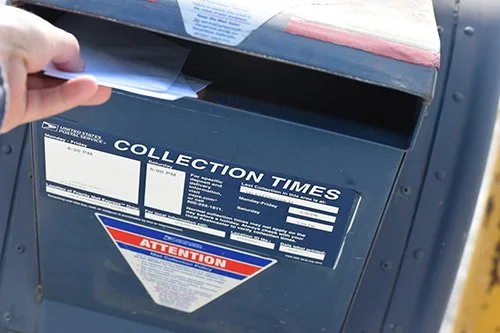
Instead, USPS states that a postmark reflects the date an item is in possession at the first USPS processing facility, not the date it was initially accepted at a local post office, mailbox, or retail counter. With the USPS currently undergoing a broad network modernization initiative, including more regionalized processing and distribution centers, the gap between acceptance and postmarking may be longer and more varied than in the past.
The result? A piece of mail dropped off “on time” may receive a postmark dated after the statutory deadline.
In fact, the chances that your envelope is going to receive a postmark the same day you drop it off is unlikely, so plan accordingly, according to the USPS. It’s important to note that postage labels you may receive at self-service kiosks or by purchasing “Click-N-Ship” postage labels online and printing them yourself do not qualify as postmarks.
Why This is a Big Deal for IRAs and HSAs
For financial organizations administering IRAs and HSAs, deadlines are everything. Contribution cutoffs, reporting requirements, and correction windows are tightly governed and often unforgiving.
This time of year, financial organizations often receive prior-year IRA and HSA contributions before the April 15 deadline. An IRA or HSA owner who makes a 2025 contribution between January 1, 2026, and April 15, 2026, must make a written, irrevocable election to treat the amount as a 2025 contribution.
An IRA contribution received by mail after the April 15 contribution deadline is considered timely made if the envelope in which it is delivered carries a postmark date of on or before the applicable deadline. Financial organizations that choose to accept these contributions are advised to save or copy the envelope bearing the postmark in the client’s file and contact the IRA owner to verify the tax year to which the contribution relates if it’s not clearly indicated.
The USPS Message: Adjust Your Mailing Behavior
The USPS did not issue this clarification as a quiet technical update. Instead, the preamble to the final rule explicitly states that the intent is to educate individuals so they can adjust their mailing behavior.
In plain terms: don’t assume last-minute mailing will work the way it used to.
The USPS highlights several alternatives for individuals who need proof of timely mailing.
Mail earlier than the statutory deadline to account for processing delays.
Request a manual local postmark at a USPS retail counter.
Purchase a Certificate of Mailing, which provides evidence of the date the USPS accepted the item.
Each option offers a stronger defense than relying on automated postmarking alone.
This clarification is a prime opportunity for financial organizations to be proactive rather than reactive. A few strategic steps can significantly reduce risk.
Update client education materials. Contribution reminders, deadline notices, and year-end communications should be refreshed to reflect the reality that a postmark may not equal the acceptance date. Even a short disclaimer can help reset expectations.
Train frontline staff. Client service teams should understand the difference between acceptance dates and postmark dates so they can confidently answer questions and avoid unintentionally providing outdated guidance.
Encourage electronic alternatives. Whenever possible, promote ACH, online contributions, and electronic submissions. Digital methods can eliminate mailing ambiguity altogether and provide clear timestamps.
Review internal cutoff policies. Some organizations may choose to implement internal “mail-by” dates earlier than statutory deadlines to protect both the organization and the client.
Document, document, document. When exceptions arise, thorough documentation of mailing methods and client instructions can make all the difference in resolving disputes.
While your clients don’t expect you to control the mail, they do expect you to help them avoid surprises. In the end, the message is simple but critical: when it comes to deadlines, the postmark isn’t what it used to be. Financial organizations that recognize this now will be far better prepared when the wave of prior-year IRA and HSA contributions begins.


